
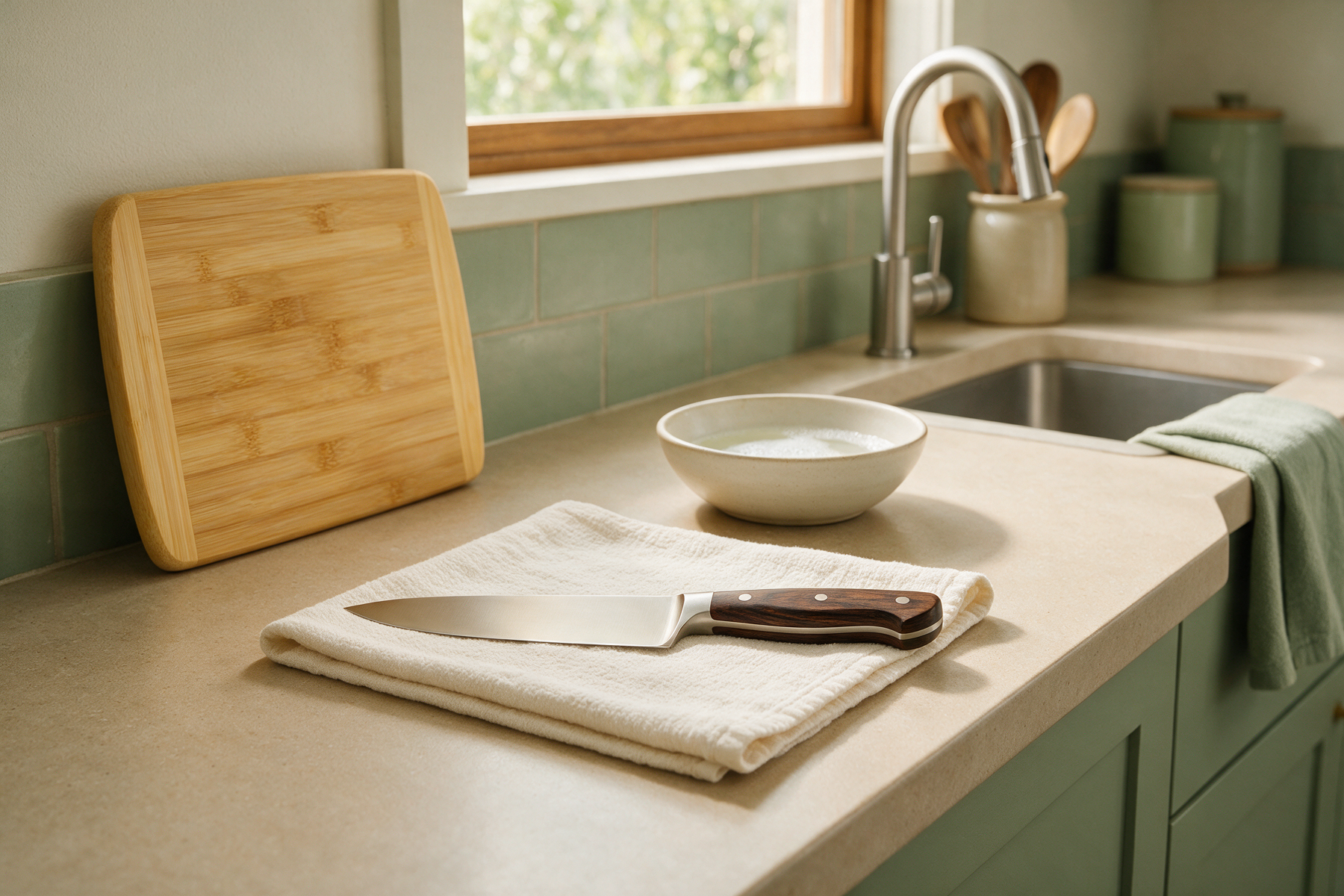
Knife care is mostly a set of small habits. A clean, dry blade stored securely and used on a suitable board is easier to control and less likely to develop avoidable damage.
1. Wash the knife soon after use
Use mild dish soap, warm water and a soft sponge. Keep the edge facing away from your hand, wash one knife at a time and never leave a blade hidden under suds or other dishes.
2. Skip the dishwasher
Dishwasher heat, detergents, moisture and movement can affect handles and edges. Contact with other utensils can also cause chips or dulling. Hand washing is the controlled option.
3. Dry it immediately
Wipe the blade and handle thoroughly with a clean cloth before storage. Stainless steel is corrosion resistant, not maintenance free, and trapped moisture is unnecessary exposure.
4. Use a forgiving cutting surface
Wood and suitable food-grade plastic boards are kinder to an edge than glass, stone, ceramic plates or bare countertops. A board should also be large enough for the ingredient and stable under pressure.
5. Do not scrape with the cutting edge
When moving chopped food, turn the knife and use the spine or a separate scraper. Dragging the sharpened edge sideways across the board can roll or dull it.
6. Store every blade securely
Use a fitted guard, suitable block or magnetic bar that holds the knife without forcing the edge against hard material. Avoid loose storage in a drawer, where the knife can damage other tools and create a reach-in hazard.
7. Maintain the edge before it becomes frustrating
Honing can realign an edge on knives that are suitable for it; sharpening removes material to restore the bevel. Follow the tool instructions and use a professional service if you are unsure of the angle or technique. Stop using any knife with a loose handle, visible crack or damaged blade until it has been assessed.
A 30-second after-use routine
- Clear the sink and wash the knife by itself.
- Rinse and dry the blade and handle completely.
- Check that the storage position is clear.
- Return the knife with the edge protected.
For material-specific guidance across the current collection, read Materials & Care.